about.
Making Insurance Coverage Simple, Memorable and Human
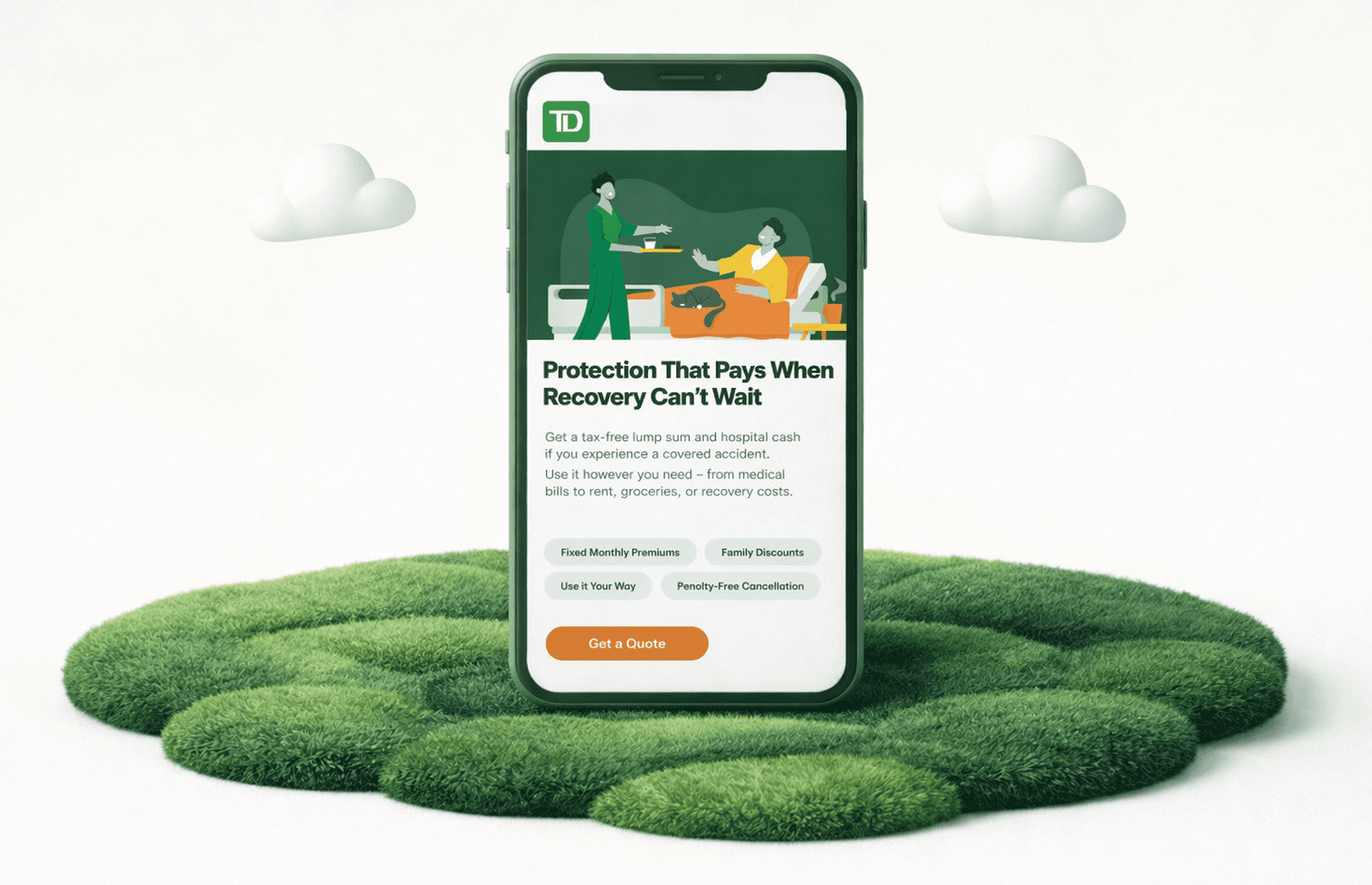
The product itself was strong: a tax-free lump sum, hospital coverage, and recovery benefits for the moments no one wants to plan for. Customers were hesitating because the value felt abstract, the benefits felt fragmented, and the experience felt like decoding fine print instead of making a decision. Insurance wasn't being understood. It was being tolerated.
The shift wasn’t just about explaining the policy, it was about making the protection feel real enough to act on. From there, every decision - copy, hierarchy, pricing, CTA -had something to anchor to.
approach.
These decisions helped to shape the work:
01 Treating benefits as lived outcomes instead of contract items so that a lump sum became a recovery and hospital coverage became a day away from work
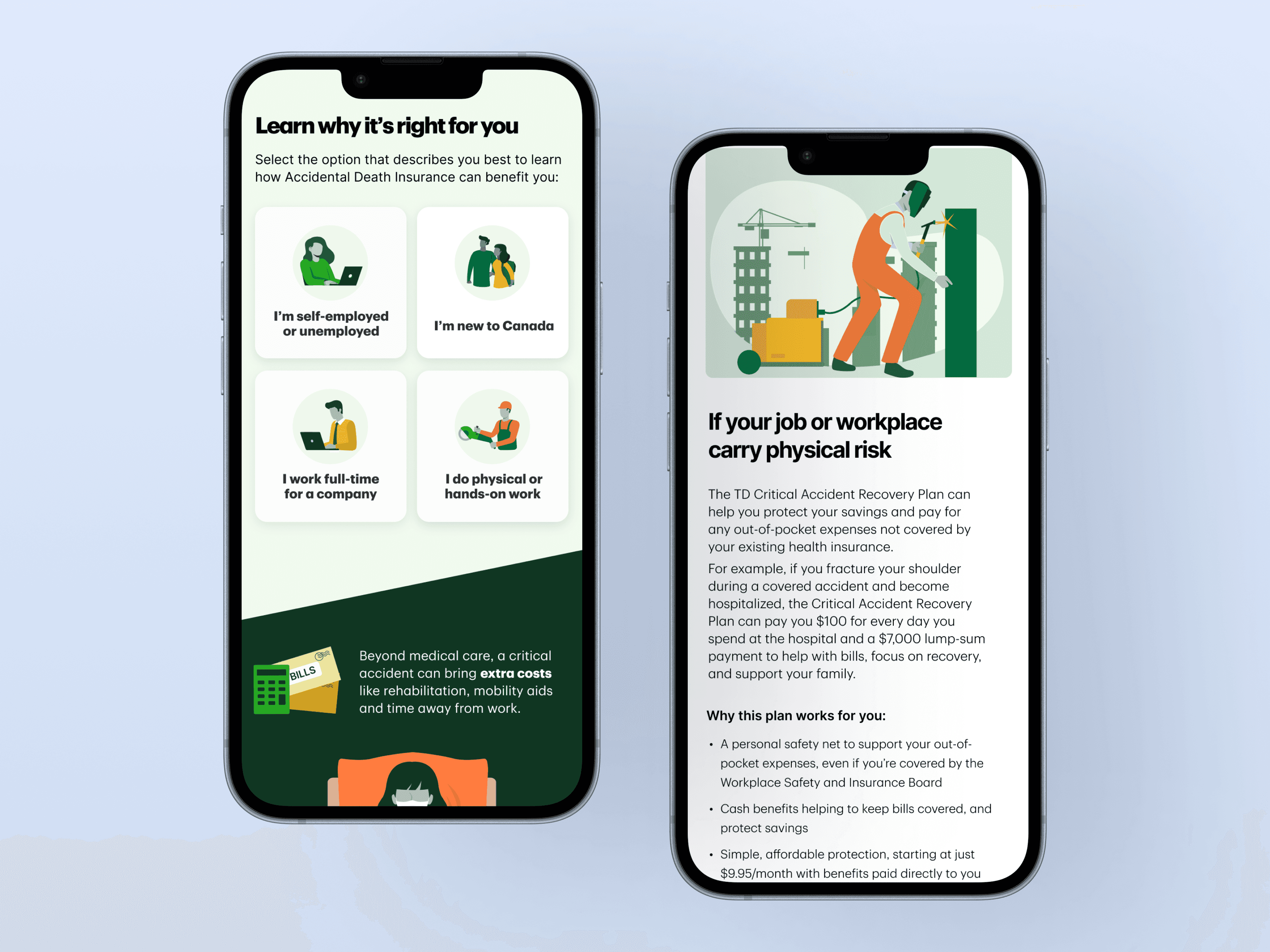
02 Architecting the information to be scannable at a glance - separating lump-sum from recurring benefits and layering severity visually
03 Structuring enrollment around confidence rather than caveats, leading with eligibility and price instead of fine print.
results.
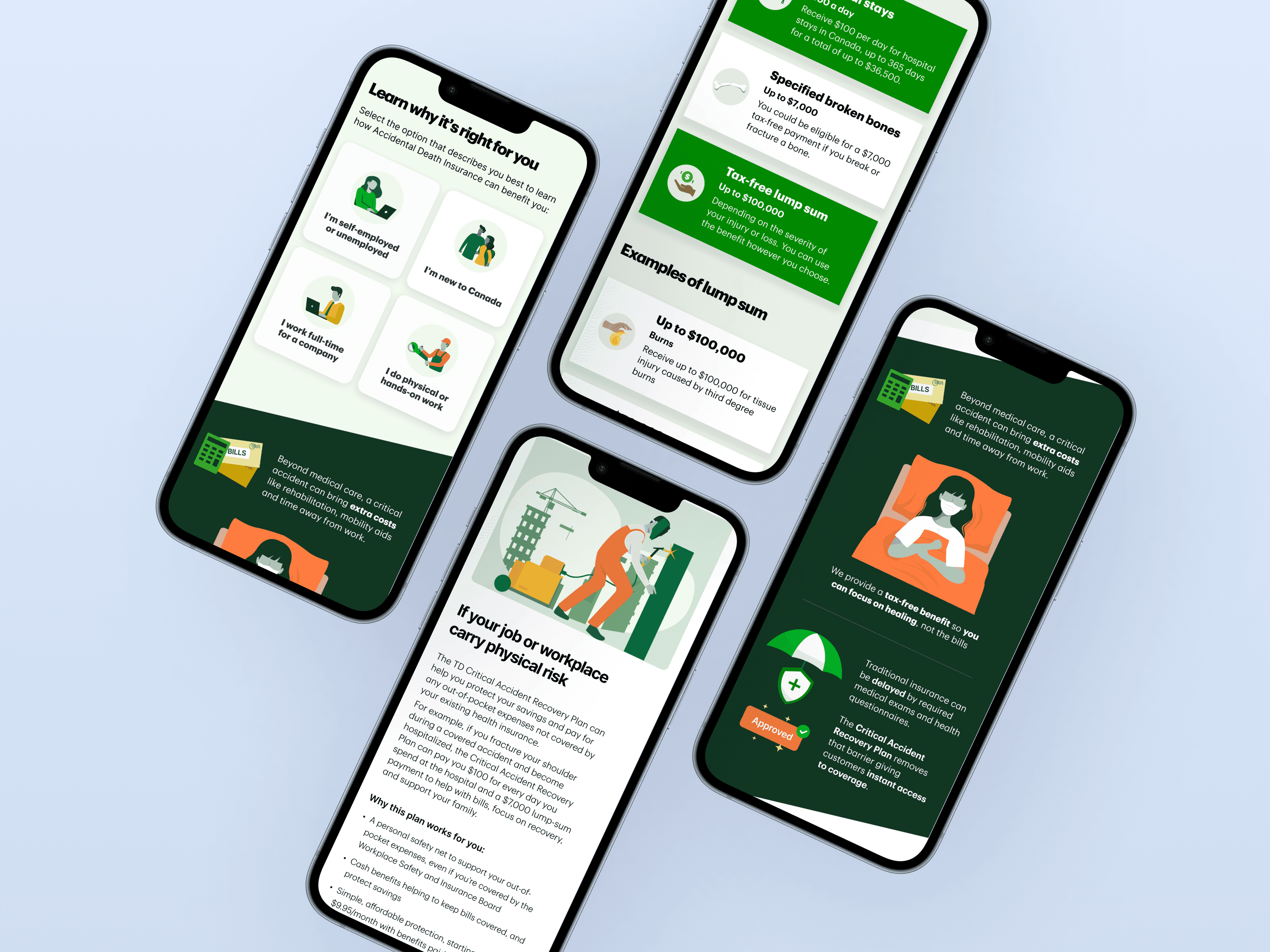
01 Value made tangible. Benefits were translated from numbers into real-world impact. A $100,000 lump sum stopped being a figure and became what it actually supports - turning insurance language into something customers could picture and feel.
02 Coverage made scannable. A modular card system separated lump-sum from recurring benefits and layered severity visually, letting customers understand a layered, conditional product in seconds instead of paragraphs.
03 Enrollment as a decision, not a form. Clear eligibility ("no medical questions required"), a lightweight price anchor (from ~$9.95/month), and confidence-led CTAs reframed the final step from "I need to think about this" into "I get this."
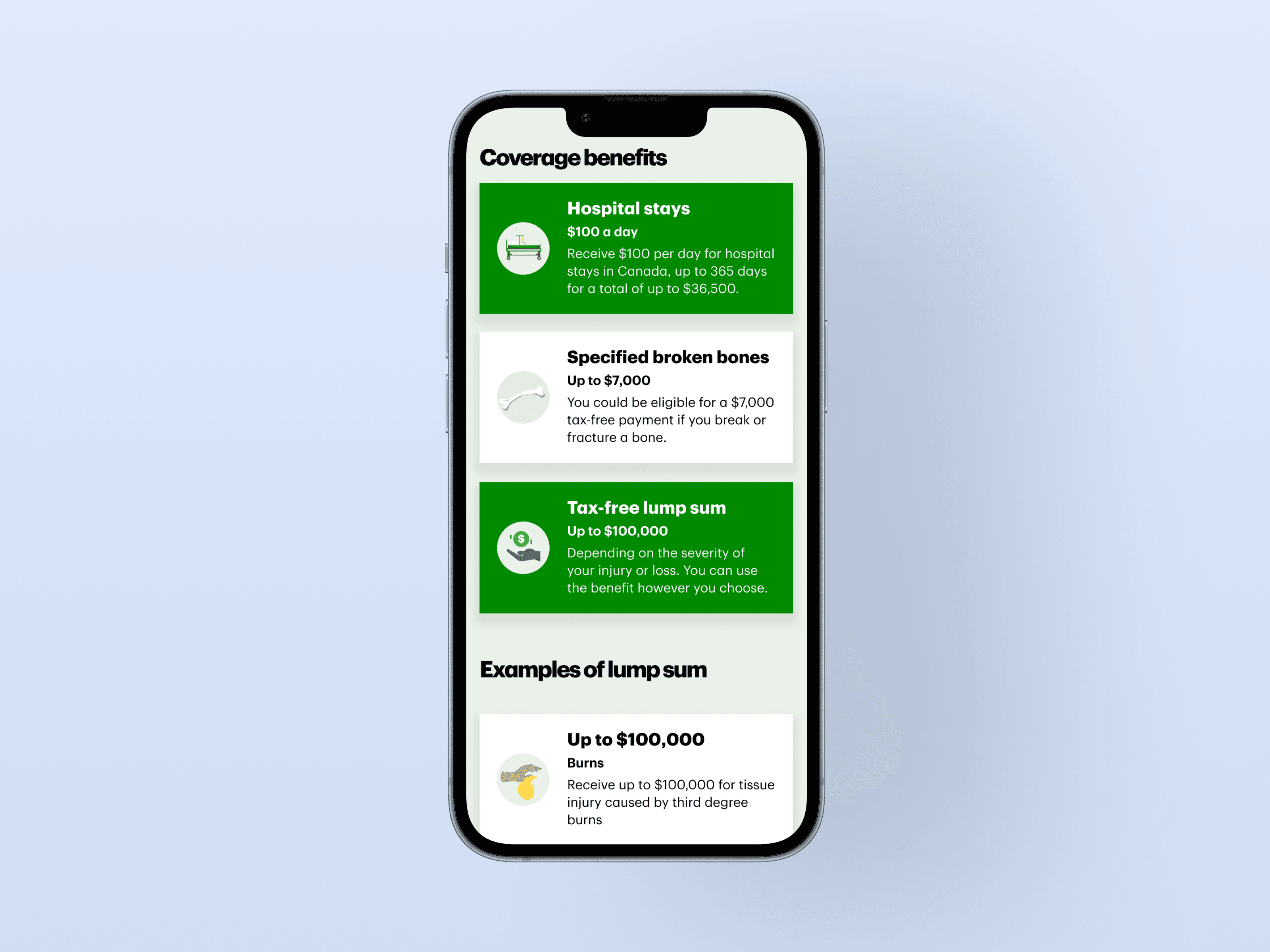

Insurance stopped reading like fine print and started reading like a decision. Customers could picture the protection, scan the coverage in seconds, and arrive at enrollment already understanding what they were saying yes to - turning hesitation into momentum at the exact point most flows lose people.
Insurance isn’t known for being engaging - but it can be clear, human, and built on trust. This work reinforced that in high-stakes, low-engagement categories, comprehension drives conversion. Clarity isn’t a finishing touch. it is the product.