about.
Designing for Life-Saving Knowledge
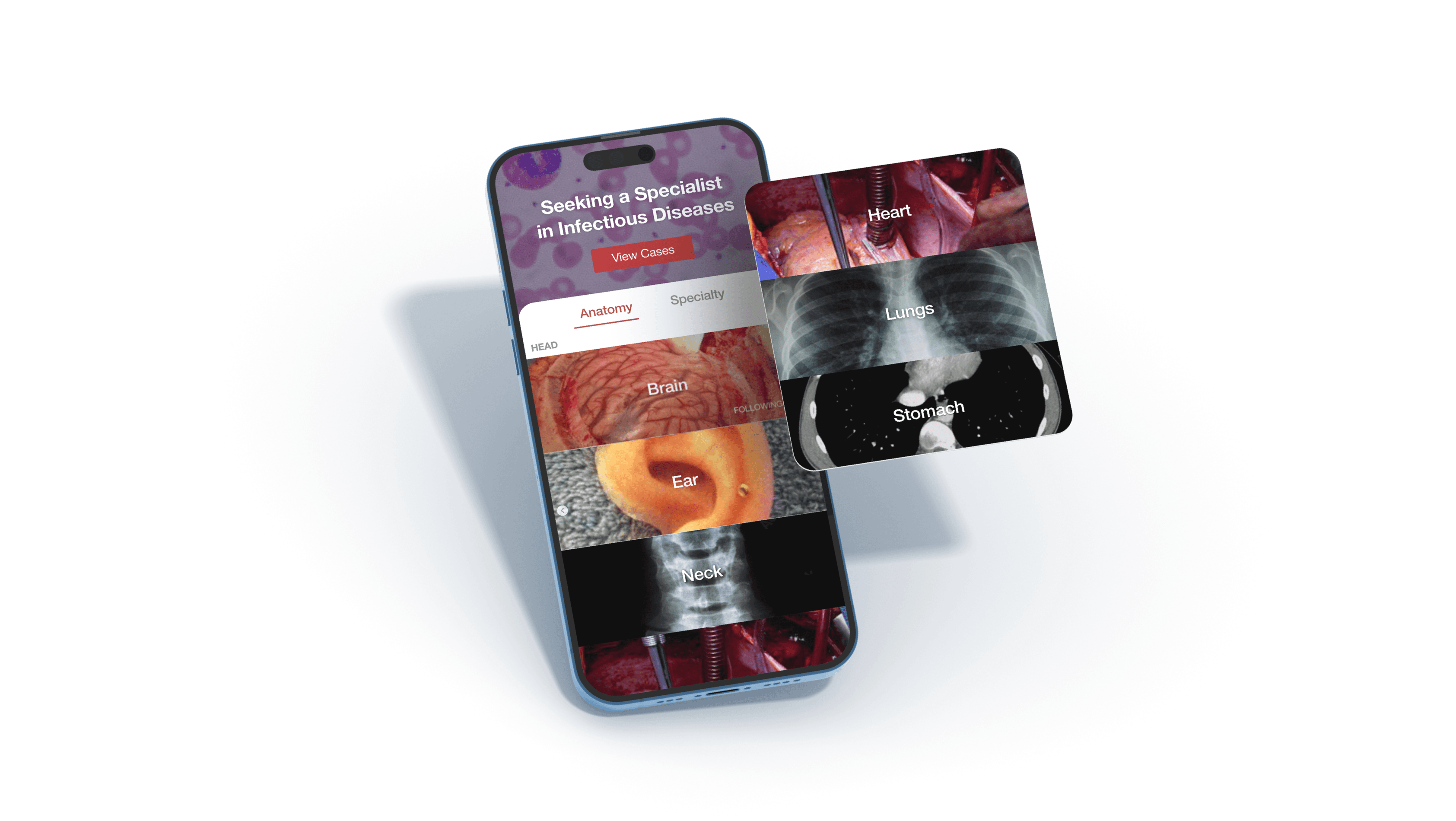
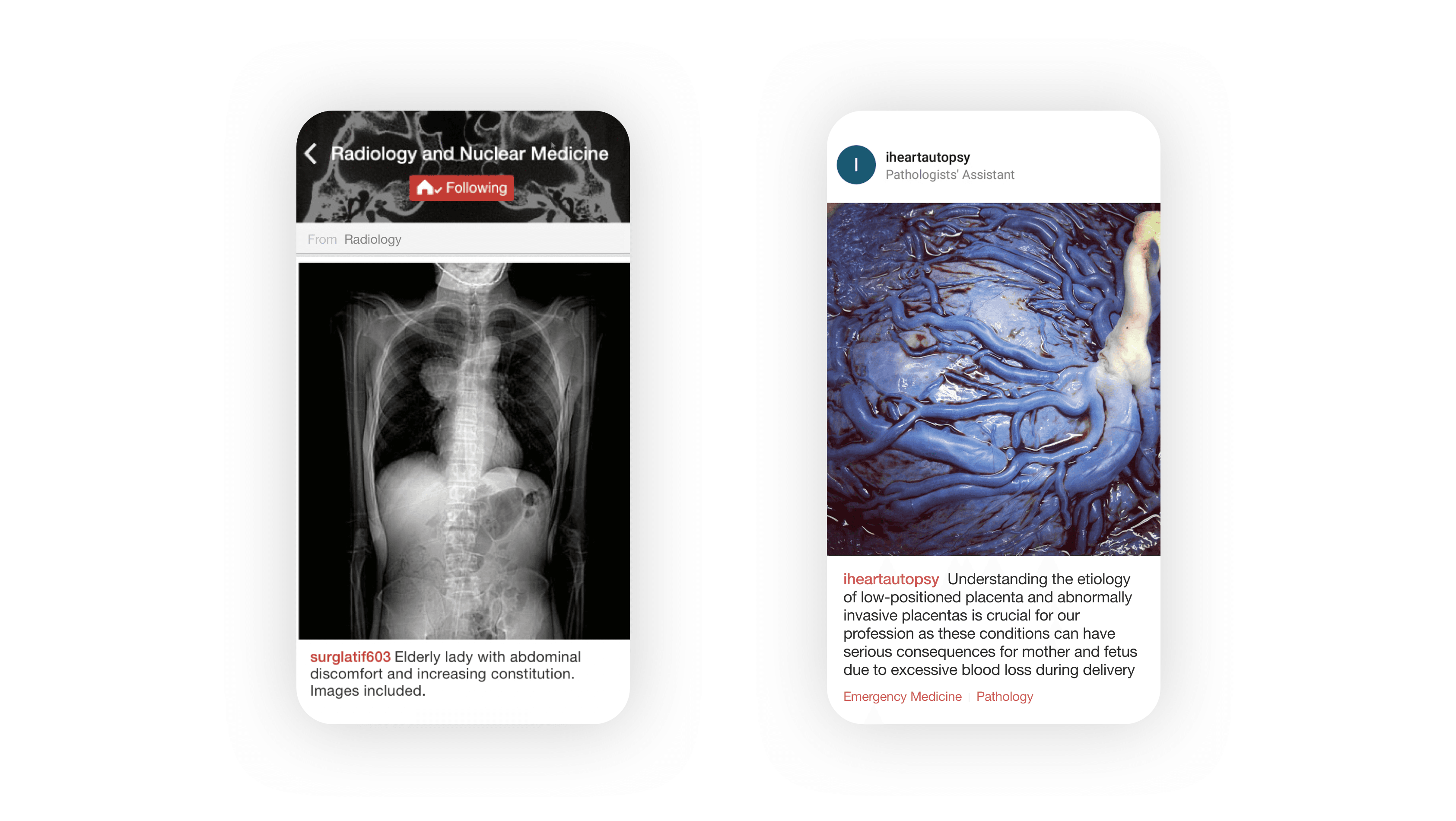
Doctors were already exchanging images and opinions every day - through text, email, and closed social groups. But none of it was indexed, searchable, or scalable. Critical learnings were disappearing into inboxes, and parallel diagnoses were being solved in isolation, with no access to what peers had already figured out.
By moving the conversation from "build a medical sharing app" to "build a case-centric reference system the whole field can trust," every downstream decision - IA, content model, community mechanics - had a north star to ladder back to.
approach.
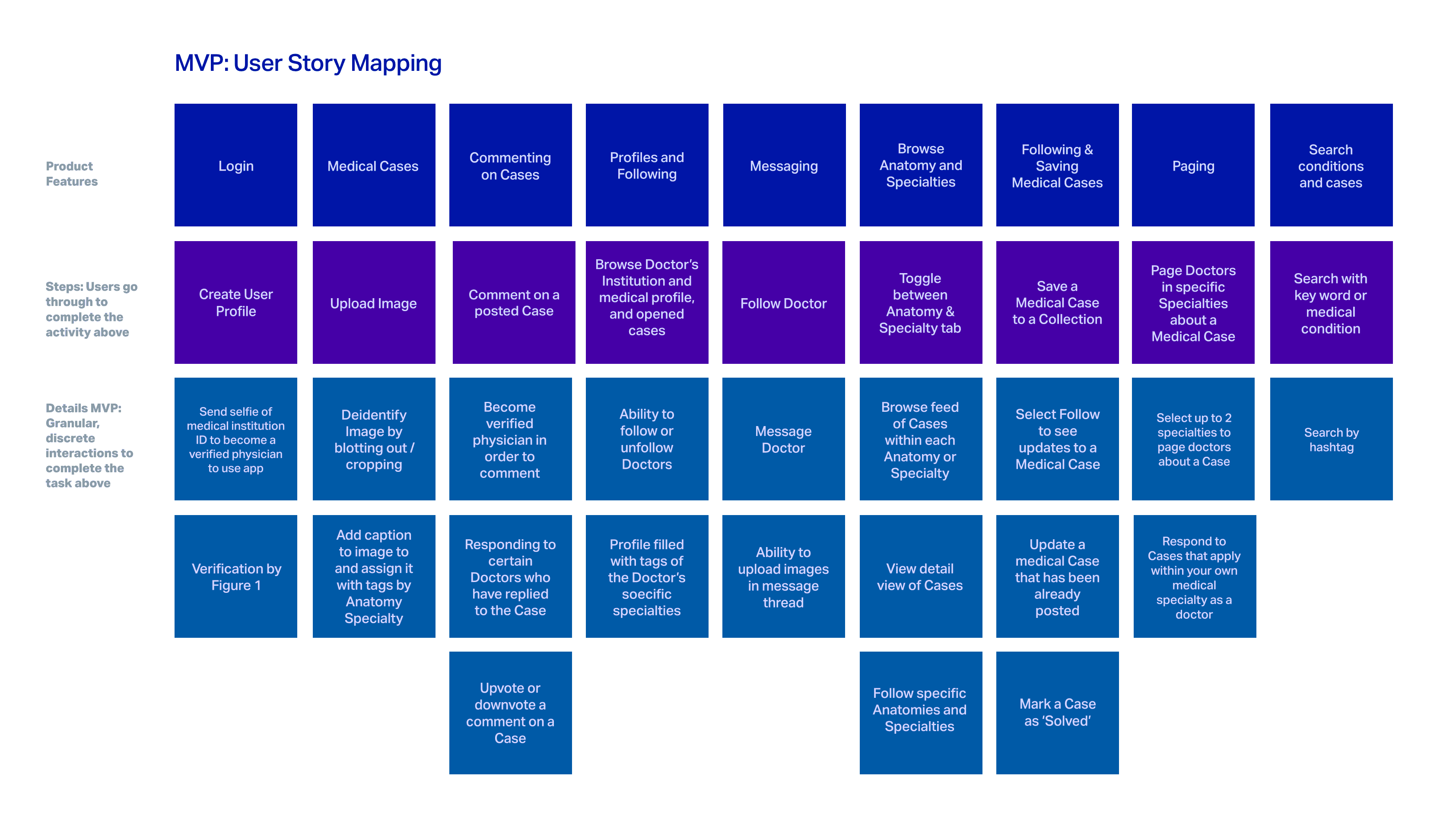
Three main decisions shaped the work: treating the Case as the atomic unit of the product so search, conversation, and learning all orbited around it; grounding design in hospital-side field research to see how doctors actually used their phones under real clinical pressure; and building one coherent system that could scale across 185 specialties on iOS, Android, and Web without losing identity.
results.
01 Cases were referenceable. The Case became the core unit of the product. Every post was indexable, linkable, and returnable - turning one-off conversations into a library doctors could search and build on.
02 Expertise was reachable in real time. Paging let doctors request a specialist via push notification, compressing days of email back-and-forth into minutes of targeted input on live, time-sensitive cases.
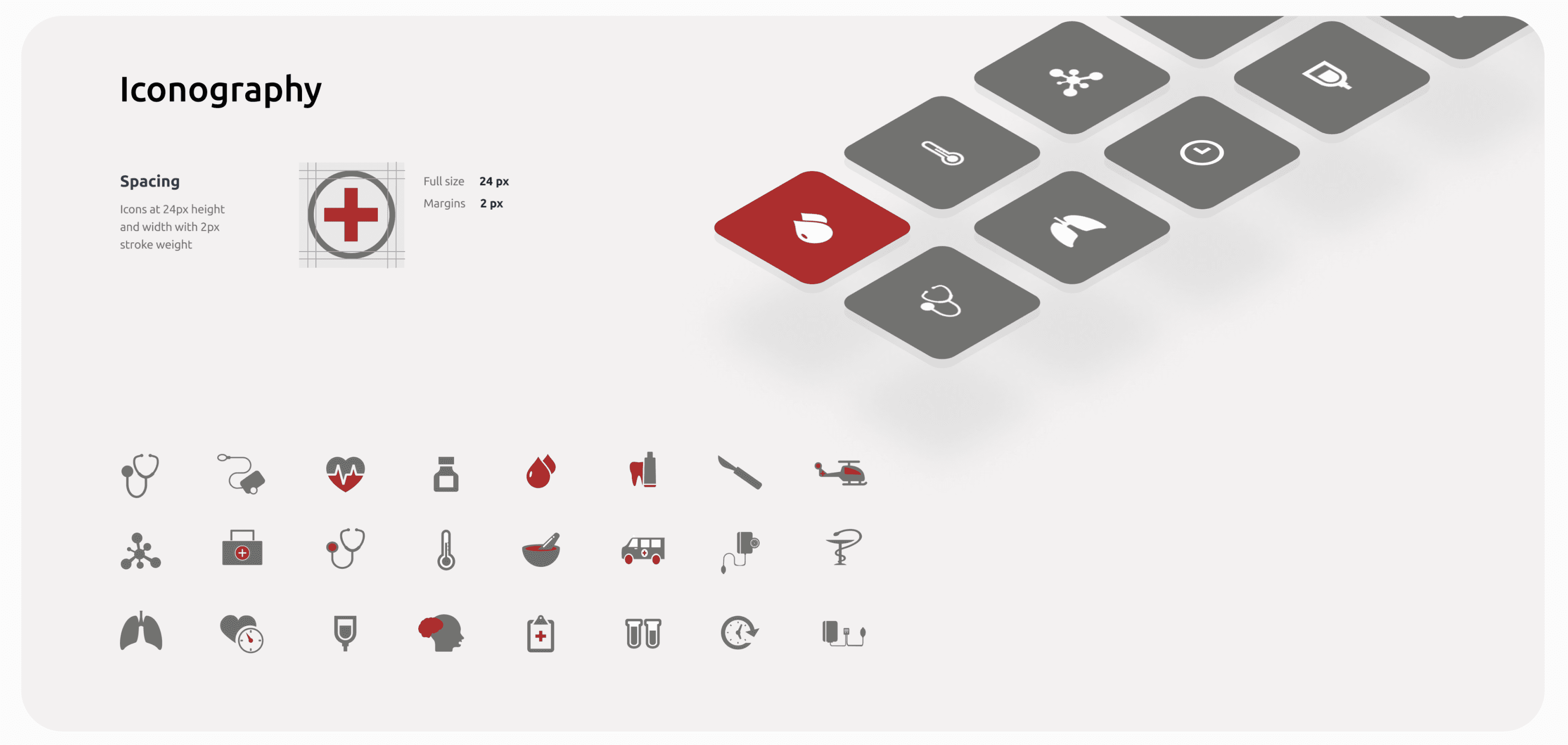
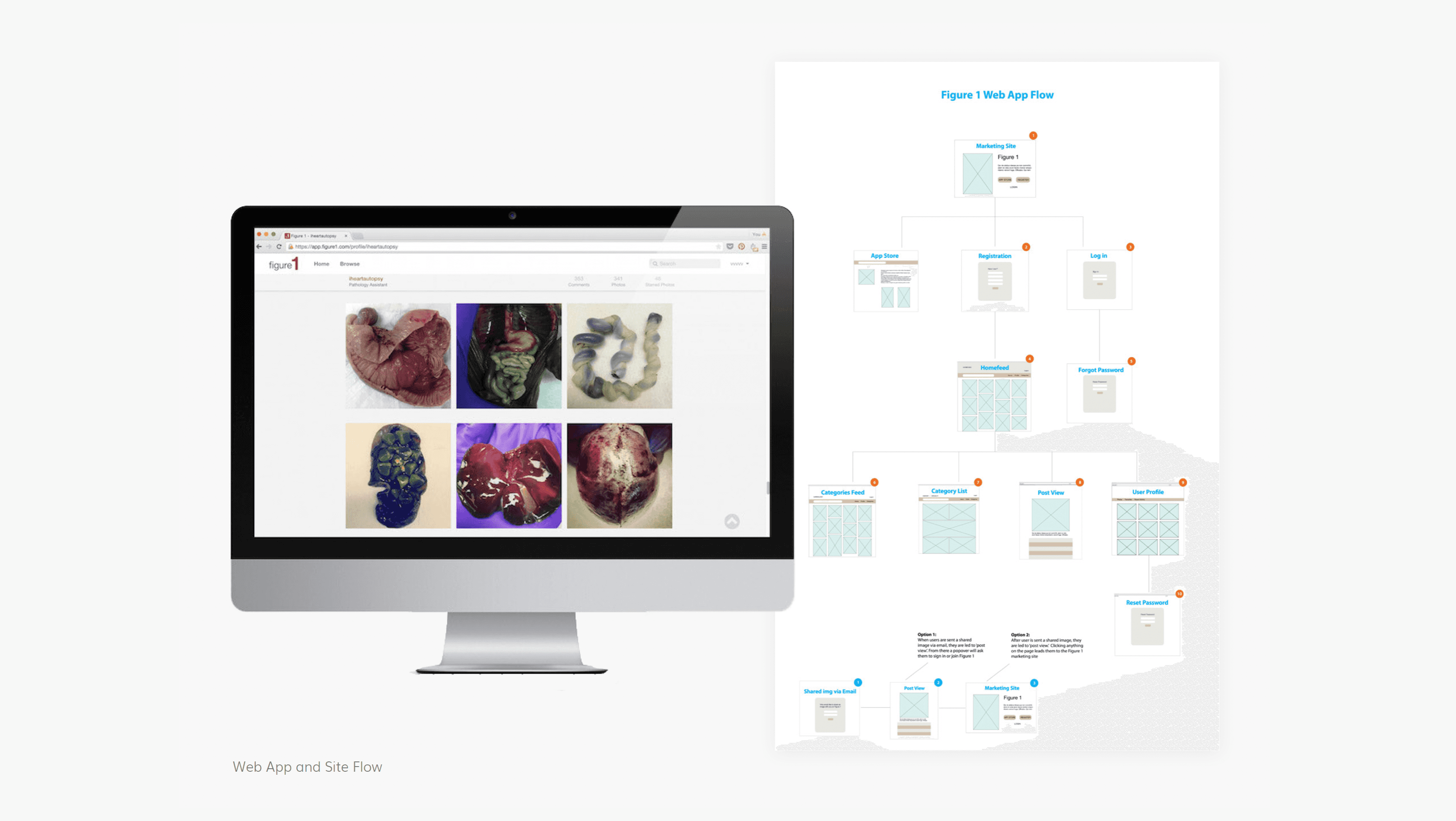
03 The system scaled across a field. A unified visual and interaction language carried Figure 1 across three platforms and 185 specialties - letting a single experience grow without fragmenting as the community did.
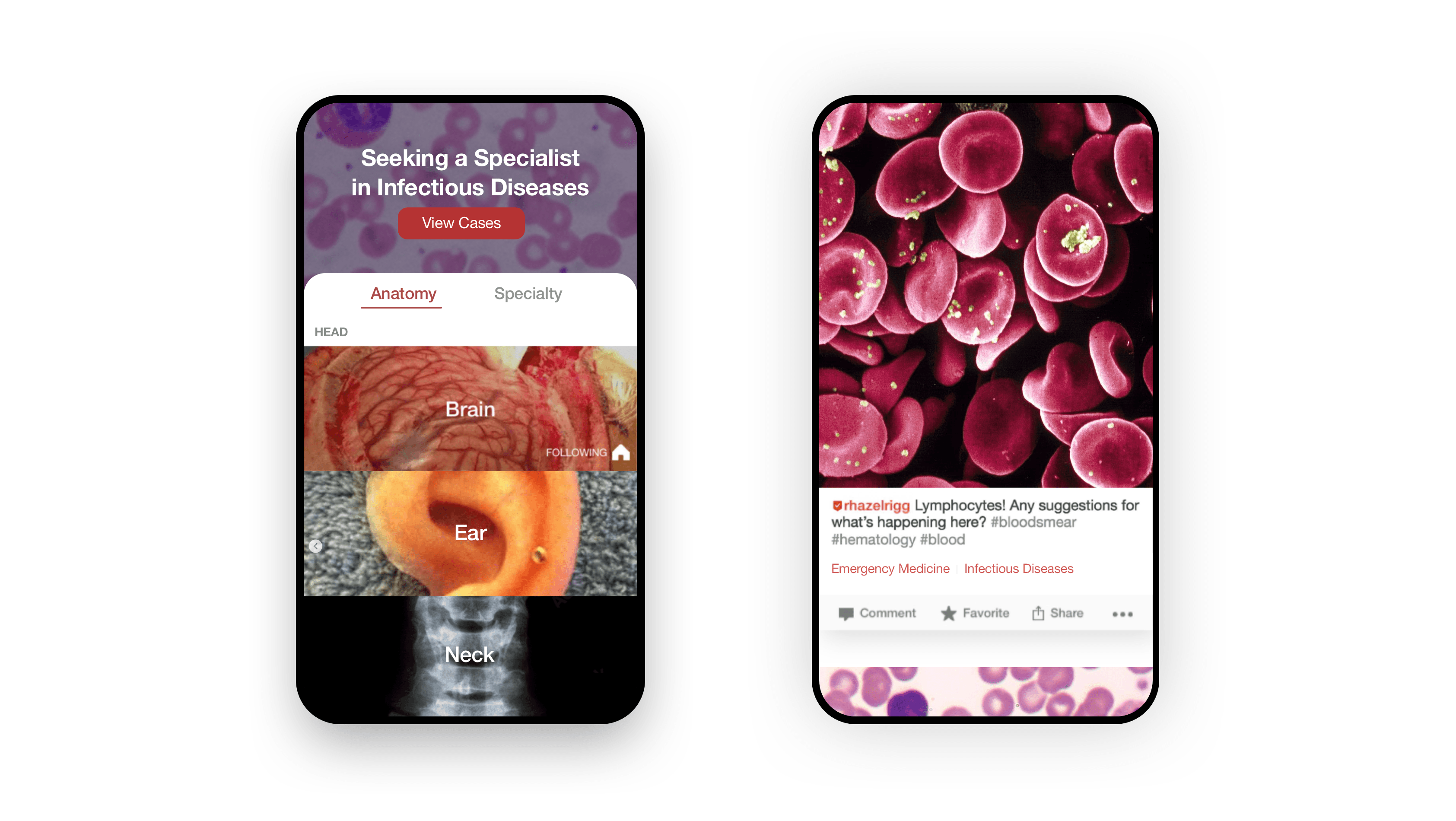
By the time the community crossed one million healthcare professionals, Figure 1 wasn't just an app - it was a live medical reference doctors used to improve patient outcomes. The work taught me that in complex domains, clarity isn't a polish layer. It's what turns an idea into infrastructure.